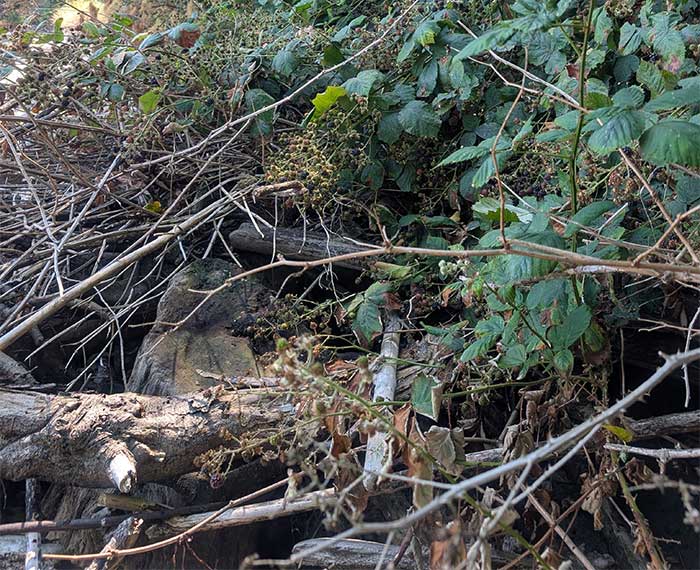
“The kids” call it “touching grass”
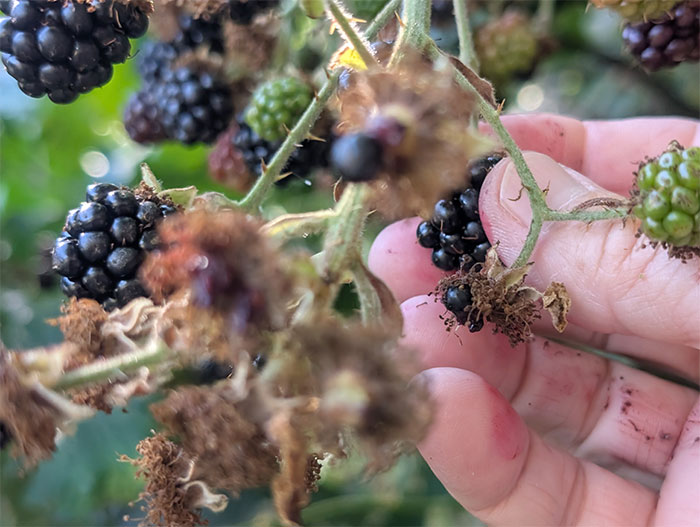
Our mother sent us out to pick blackberries once, along a gravel road, each of the three of us with an empty Folger’s coffee can (wildly optimistic of her to think we would fill even one). I can still see the weathered gray wooden garage beyond the road, its roof slumping in the middle, feel the early afternoon July sun beating down, making me squint. A half-hour or so of us slouching and complaining, panicking at approaching bees and hornets, and whining about blackberry stickers was enough to convince her that activity was too aggravating to repeat.
But that’s one of the things about being an adult. You realize that if you pick the blackberries you can have blackberry pie. And jam and syrup. When you’re an adult, you can choose to pick berries in the cool part of the day or in a shady spot. You learn to carefully thread your hand through overhanging, thorny canes and under spider webs, and mostly manage to avoid pricking your fingers on the self-protective stickers, and if not, pull them from your insulted thumb or index finger.
Our mother told us that these berries, Himalayan Blackberries, are an invasive species. (She was right, of course, and this story from the UW Daily explains it, “The tangled emotions surrounding the invasive Himalayan blackberry.”) She said that the native berries were much better; my husband says they are also thornier. I don’t recall if I have ever seen or eaten a native Pacific Blackberry. But the Himalayan berries are also delicious, and they are everywhere—they are, after all, invasive.
I have picked my last batch of berries for the year, rinsed and frozen most of them and made a small batch of jam so dense with dark, complex flavor that I could have eaten it all at once, and just as packed with self-satisfaction for creating something from a “weed,” free for the picking. In the claustrophobic, sodden dark of a western Washington winter, I will open a container of frozen berries and recall the deep blue sky and yellow-white light of a summer day fragrant with the heady perfume of ripening berries.
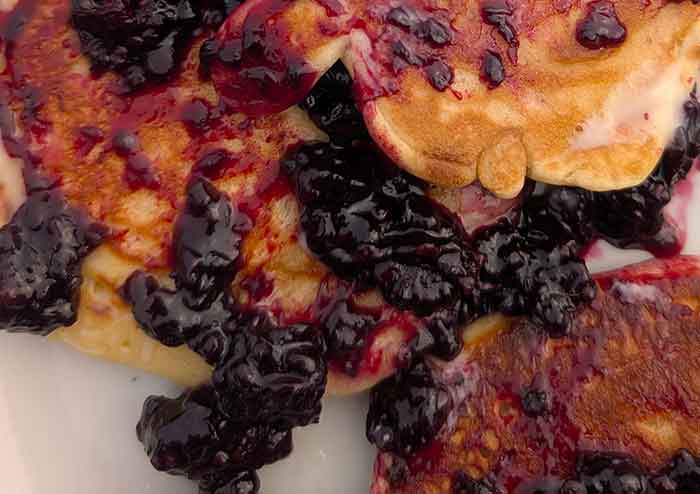
The Salish peoples who lived here consumed the Pacific blackberries, salmonberries and other native fruit, and I appreciate that continuity, while recognizing the irony of the region’s invasive colonists introducing these invasive berries. Most Americans no longer need to pick berries to have enough to eat. I remember my mother processing peaches and pears for days, filling glass Mason jars, and I think preserving fruit, much less picking it, too, is a dying domestic task.
Beyond the satisfaction of harvesting free food, getting out into the brambles on a sunny day is a blessedly normal custom, a way to ground myself in familiarity and the natural world when all the presumptions of our lives as Americans are threatened. There’s a phrase right now, rapidly becoming a cliche, “Touch grass,” go outside, emerge into the real world from the virtual world and the anxiety caused by unpredictability. I need to plant my feet on solid ground, breath fresh air, feel the breezes, and hear a Kingfisher chittering far above, preparing to dive head first into the waves for a tiny silvery fish.
America itself feels like a chaotic mass of dangerous brambles right now, and we long to find our way through the entangled canes unscathed. It seems we must reach through the thorns if we are to find the sweetness that is now just beyond our reach.